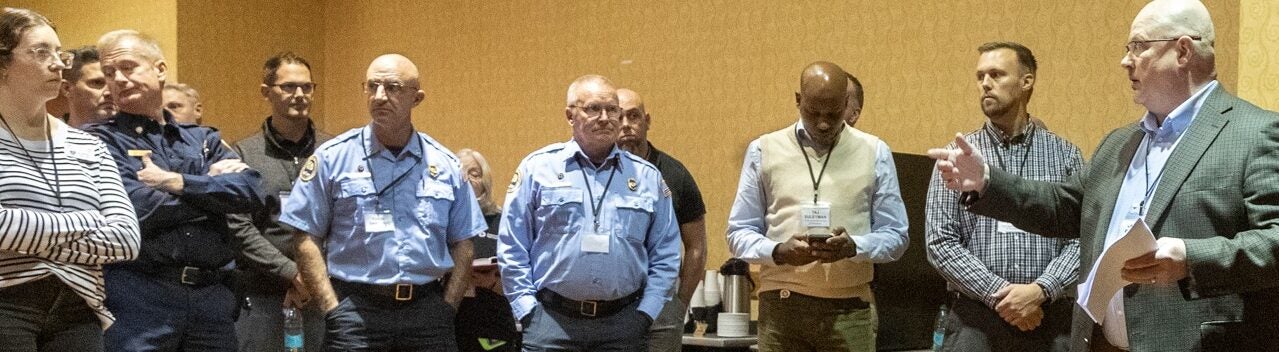
Image of a group of participants standing together

Crisis Leadership Summits for Preparedness Preparing communities for a changing threat profile

Program Summary

Format Convened in your community Duration 1-1.5 days Accepting Applications 2026 and 2027
Participants Local cross-sector leaders Taught By Harvard NPLI Faculty
Bring to your community Apply Here
Have Questions? Contact Us

Program Overview

Prepare your community. The threat landscape is changing. The disaster response environment is increasingly locally-based, independent, and complex. Convene an NPLI/Harvard leadership training seminar to powerfully convene and connect leaders from across your government, business, and non-profit sectors. Attendees have included public safety, public health, local nonprofits, business, faith-based, and human service organizations, and political leaders.

Bring Harvard faculty and experienced crisis leaders into your community. The nationally recognized Crisis Leadership Summit curriculum provides Meta-Leadership knowledge and practices developed over 20 years of field research, practice, and teaching. The program also includes tailored crisis simulations designed for your community’s unique risk profile. The outcome is a more connected network of force-multiplier leaders, armed with the tested ideas, tools, and skill set of Meta-Leadership. The Summit serves as a launch point for continued community connectivity that will make a difference when a disaster hits.

Benefits

  • Strengthen preparedness and collaboration across sectors, connecting key leaders and supporting unified crisis response: Exchange business cards BEFORE an emergency.
  • Improve leadership capacities with pragmatic tools for navigating crisis disruption, response, and recovery: Everyone works with a shared vocabulary and framework.
  • Support preparedness with proven methods that can enhance leadership performance both during times of crisis and every day, offering high impact for the investment.
  • Promote systems thinking and action to build resilience across communities and organizations, based on extensive research and development at Harvard University.
  • Share knowledge and lessons across your community to fortify critical decision-making before, during, and after crises: Lead with precision when it matters most.
  • Align leadership practices and build confidence across sectors to reduce gaps in emergency response and coordination: Bring out the best in your community.

Impact in Action: The Springfield, MO Summit (October 2025)

316 Cross-sector community leaders  |  65 Organizations Represented  |  4 Customized Crisis Simulations

This program builds on NPLI’s long-term legacy of collaborating with the government and foundations to develop the Meta-Leadership Summit for Preparedness initiative, grounded in the lessons of Hurricane Katrina. That initiative, in 2006-2011, trained 5,000 community leaders across the country through 36 high-impact Meta-Leadership Summits for Preparedness. The resulting networks elevated local connectivity and response capacity.

Twenty years later, NPLI relaunches its community-oriented leadership preparedness program.

Twenty years later, communities once again are required to take a greater role and responsibility in local disaster response. Recognizing this priority, the NPLI has relaunched the program in support of communities nationwide.


Additional information about Meta-Leadership Summits

The Curriculum Builds on Meta Leadership Practices and Principles from the Acclaimed Crisis Leadership Book, “You’re It”. (image shows the book cover). Meta Leadership: Working across roles and organizations to solve problems no one can solve alone. Connectivity: Intentionally linking up, down, across, and beyond your organization to align people, information, and action. Force Multipliers: Using tools, relationships, and strategies that dramatically increase the impact of limited people and resources in a crisis. Swarm Leadership: Coordinating the actions of many connected leaders toward a shared mission that instinctively binds people together. Growth Mindset: Viewing abilities as developable and applying challenges and failures as fuel for learning. Walk in the Woods: Moving from fixed positions to mutual benefits so people can craft solutions together. Cone in the Cube: Seeking and integrating multiple perspectives to see a more complete picture of a complex situation. “Get out of the Basement”: Recognizing when you are in panicked survival-mode thinking to deliberately return to calm, strategic leadership.

Crisis Simulations are Developed in Partnership with Local Communities to Bring the Summit Impact Home Designing Simulations: As part of the planning process before the Summit, Harvard faculty collaborate with local hosts to develop scenarios of concern to the community. The scenarios are realistic, relevant to the community, and jarring. In real life, when crisis hits, cities will be working largely independently, with limited outside support. There is value in preparing and connecting NOW! Examples of Crisis Simulations: A cyber-attack that takes out the local electrical grid; a catastrophic weather-related event; an infectious disease outbreak

Alt Text for Website Images Sample Preparedness Summit Agenda The Evening Before the Summit Day 5:00-5:30PM: Reception for City/State Leaders and Summit Participants 5:30-5:50PM: Welcome to the Crisis Leadership Summit: Local elected officials (Mayor or Governor), community leaders, and business leaders welcome and speak to the importance of coming together and connecting, before disaster hits. 5:50-6:20PM: Introduction to Crisis Leadership by Harvard Faculty: Harvard faculty speak to what happens to you as a leader when a crisis hits, what can you do about it, how can you be your best and bring out the best in other community leaders. 6:20-7:00PM: Reception Continues Summit Day – Morning 8:30-8:45AM: Welcome to the Summit: City/State Leader gives opening remarks and introduces Harvard Faculty Members. 8:45-10:30AM: The Meta-Leadership Mindset: Participants learn how to apply Meta-Leadership to assess situations, solve complex problems, and coalesce key stakeholders. 10:30-11:00AM: Break and Network: Meet other leaders, intentionally! 11:00-12:15PM: You, the Leader: Participants learn how to build a “growth mindset,” the foundation of Meta-Leadership thinking, into how you think and act, and how to respond when you or others get caught in panic mode. This session also introduces Swarm Leadership, leveraging social instincts to forge cohesion. Summit Day – Afternoon 12:15-1:15PM: Lunch and Network: Meet other leaders, intentionally! 1:15-2:00PM: Crisis Simulations: Participants engage in realistic crisis scenarios tailored to the community’s specific concerns & risk profile. Assuming federal support will be constrained, participants work in groups to determine how the community will respond and build resilience in the aftermath. 2:00-2:30PM: Applying Meta-Leadership When It Matters Most: Participants are challenged to apply what they learned in the morning about Meta-Leadership to the scenarios they experienced in the afternoon. 2:30-3:00PM: Break and Network: Meet other leaders, intentionally! 3:00-3:45PM: Meta-Leadership in Practice: Harvard faculty share stories collected over their two decades of being at the front lines with crisis leaders, case examples, and ways to keep the network and learning alive and robust 3:45-4:15PM: Key Lessons Learned: A panel of community participants, representing different sectors, will share the most important lessons they learned from the day, in a lively and upbeat way to apply what was learned and gained in the Summit 4:15-4:30PM: Wrap Up and Conclusion: Recognition, first planning, and moving forward, as a community of connected leaders!

Summits are Designed to Convene Leaders Across Sectors with Decision-Making Power & Influence Before, During, and After Crises Examples of attendees – Summit hosts invite and curate participants based on community needs and dynamics: Government Leaders: Elected Officials; City/County Administrators; Key Appointed Leaders; Communications/PIO Leaders; Department Heads and Deputies; Community Outreach Leaders Public Safety: Fire Department Chiefs; Police Department Command Staff; EMS Directors; Emergency Management Leaders; Homeland Security Coordinators; Public Works/Safety Leadership Health Care & Public Health: Hospital Leadership; Emergency Department Directors; Preparedness & Safety Coordinators; Public Health Department Leaders; Behavioral Health Administrators; Long-Term Care Leadership Business & Industry: Corporate Executives; Business Continuity Managers; Risk Management Directors; Operations & Facilities Leaders; Supply Chain/Logistics Directors; HR Leaders Education: University Leadership; School District Leadership; Campus Safety Directors; Key Faculty Experts; School Operations Managers; Teacher, Student, & Parent Leaders Nonprofit & Humanitarian: Human Services Executives; Disaster Relief NGO Leaders; Shelter & Food Bank Directors; Faith-Based Organization Leaders; Behavioral Health Nonprofit Leaders; Community Foundation Leaders Infrastructure & Utility: Electric Utility Managers; Water System Leaders; Telecommunications Directors; Transportation/Transit Leaders; Waste Management Supervisors; Airport Operations Leaders Community: Neighborhood Association Leaders; Civic Club Leadership; Community Coalition Directors; Advocacy Organization Leaders; Local Philanthropy Leaders; Volunteer Coordinators

NPLI/Harvard Faculty and Local Hosts Partner Dynamically to Bring Crisis Leadership Summits to Life Harvard’s Contributions to the Summit: Develop the curriculum with input from local hosts, including customized crisis simulations based on the region’s risk profile and specific concerns; Serve as faculty to present and facilitate the training; Provide guidance to local hosts on coordination, program management, and execution; Connect local hosts with other crisis leaders in the extensive and valuable NPLI/Harvard network to offer direct assistance and support in planning and execution. Local Hosts’ Contributions to the Summit: Provide input to Harvard faculty on tailoring the training to the local audience, in part through soliciting perspectives from community stakeholders; Procure and raise funds to host the cost-effective program from public and private sources (note – some Summits charge attendees $50 to cover Summit costs); Identify and invite a cross-sector group of participants (often 100-300+ leaders); Manage event logistics, including securing the venue, registration, catering, and AV. Throughout the process, Harvard faculty collaborate with the local organizing committee, exchanging ideas, planning steps in developing the Summit, and building the curriculum.

316 community leaders representing 65 organizations across sectors came together for a one-day Summit supporting wider community involvement on crisis topics

  • The Summit led to the formation of four cross-sector planning groups to support future crisis preparedness and resilience

— Groups range in focus from public safety and infrastructure to public health and human services

— 50% of Summit participants volunteered to be part of ongoing planning groups

  • Participant feedback emphasized that the Summit broke down silos and brought the community together
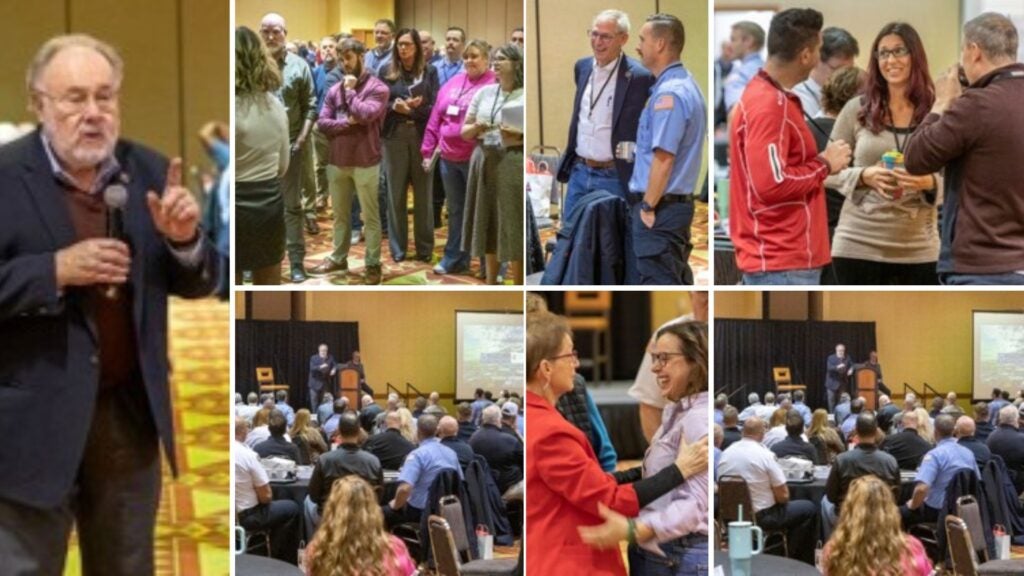
Image Collage 1: Harvard NPLI Founding Director and faculty member Dr. Leonard Marcus speaks into a microphone, addressing an audience of Summit Participants during a conference session. 2: Two Summit Participants greet each other warmly with smiles and a handshake in a conference hallway, surrounded by other attendees. 3: Two Summit Participants, one in business attire and one in a uniform, stand and chat casually near a table during a networking break. 4: A group of Summit Participants stands in a semicircle, listening attentively to a woman speaking during an interactive session. 5: Harvard NPLI faculty member Eric McNulty gestures while speaking on stage, presenting to a seated audience of Summit Participants 6: A large audience of Summit Participants sits facing a stage where two Harvard NPLI Faculty, Dr. Leonard Marcus, speaks beside a projected slide. 7: Three Summit Participants converse in a small group, smiling and holding drinks during a networking moment.

National Preparedness Leadership Initiative
Sign Up for Email Alerts